

Airport Logistics
Winter WeatherPlanning for Cross-BorderTransfers
Guide to winter transfer planning across Ontario, Michigan, and Ohio, including fleet preparation, snow tire standards, Route 401 and I-75 routing, and schedule buffer planning.
- Exact-address pickupEntrance confirmed
- Border routeCrossing options planned
- Sedan / SUV / SprinterMatched to passengers
- Timing reviewDelay-aware pickup
How does winter weather change a cross-border transfer plan?
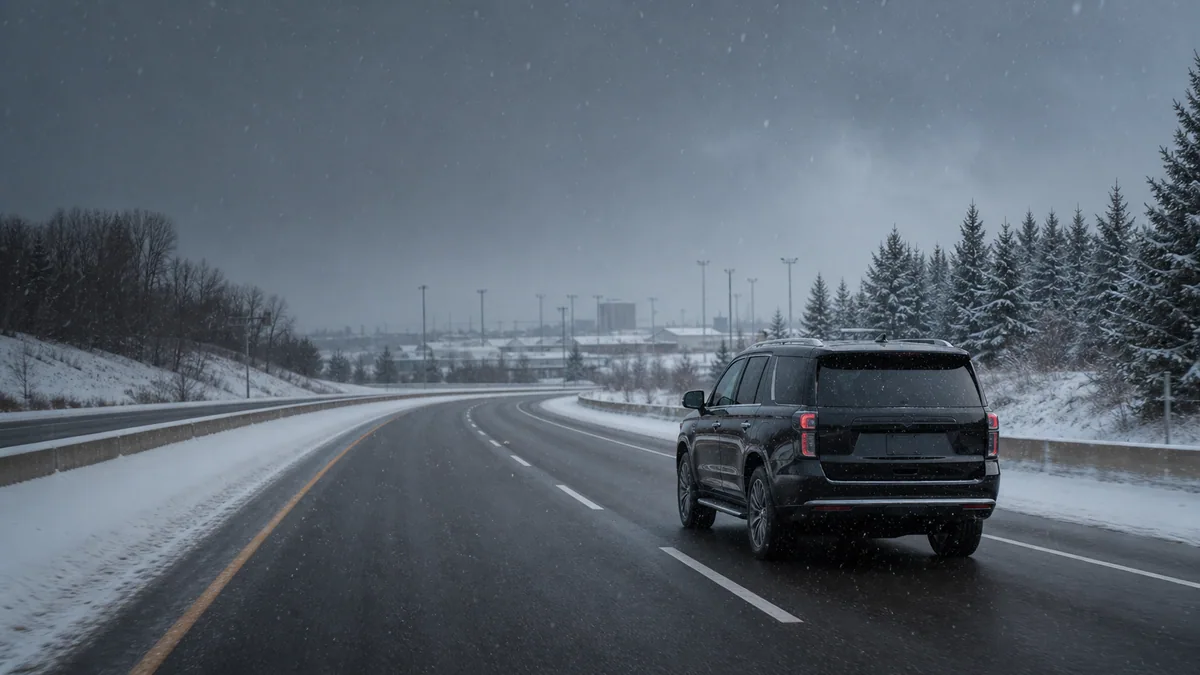
Winter weather changes every Ontario to U.S. transfer. A route that is routine in dry conditions can become schedule-sensitive when snow, freezing rain, lake-effect bands, bridge wind, airport delays, or highway closures affect Route 401, Highway 3, I-75, I-94, or Ohio corridors.
Weather should be accounted for before the chauffeur is assigned, not after the vehicle is already late.
Fleet maintenance standard
Winter preparation depends on tire condition, braking performance, lighting, wipers, fluids, battery condition, heating, defrost capability, and clean vehicle glass. Snow tires or winter-rated tires are a baseline for severe-weather transfers because stopping distance and traction matter more than cosmetic vehicle class.
Vehicle cleanliness also affects the trip. Snow-packed wheel wells, obscured sensors, frozen doors, and blocked lighting create avoidable service risk.
Dispatch weather routing
Metro Elite monitors weather across the full route instead of relying on the pickup city forecast alone. For Ontario departures, Route 401 conditions can differ between Toronto, London, Chatham-Kent, and Windsor. For U.S. travel, I-75, I-275, I-94, and Toledo or Cleveland approaches can change quickly during lake-effect snow or freezing rain.
Border crossing selection may also change when bridge wind, tunnel access, customs volume, or roadway incidents alter the safer operating path.
Airport delay synchronization
Winter flight schedules can create rolling delays at DTW, YQG, and TOL. A flight delay does not automatically mean the road transfer should be delayed by the same number of minutes, because terminal congestion, baggage timing, runway holds, deicing, and ground transportation queues may compress or expand the passenger handoff window.
Metro Elite uses live flight status alongside road conditions before staging the vehicle.
Schedule buffer planning
For executive assistants and travel managers, the correct winter planning metric is buffer, not optimism. Build margin around meeting times, international departures, medical appointments, and event call times.
During severe weather, a fixed pickup time may be less useful than a managed departure window with dispatch confirmation at defined checkpoints.
Winter booking checklist
- Confirm pickup and destination addresses with weather risk in mind.
- Share flight number and appointment deadline before dispatch.
- Build route buffer for Route 401, tunnel, bridge, I-75, and I-94 conditions.
- Confirm luggage count because winter gear reduces usable cargo capacity.
- Keep passengers reachable for pickup timing changes.
- Allow dispatch to adjust crossing choice when weather or roadway safety requires it.